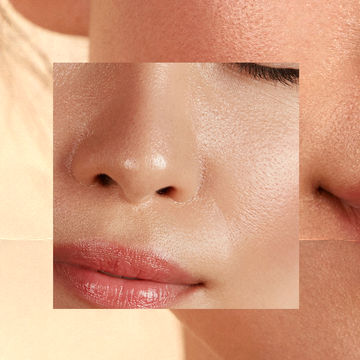
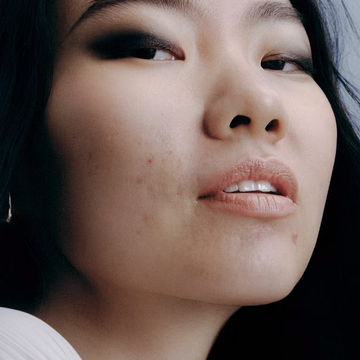
Ever spot a little black bump on your nose and immediately get annoyed? Yeah, same. Because you know damn well the only way to get rid of a blackhead is to squeeze it until your face hurts. However, that's not the truth, according to experts. There actually are gentler methods to reduce blackheads (and all acne, to be fair) than popping. (Who knew!?)
Before we get into how to remove them, I do wanna get one thing straight: There’s nothing wrong with having blackheads—they’re just part of life (same goes for fine lines, stretch marks, cellulite, under-eye bags, etc.), especially if you already have acne-prone skin. But they aren’t the same as your classic pimple. Keep reading for everything you need to know, including how to get rid of blackheads, if you can get rid of them fast, if it’s okay to squeeze them, and more.
What are blackheads?
Before learning how to get rid of blackheads, let’s take a second to figure out what we’re removing here. What exactly are blackheads? “A blackhead is a waxy plug made of oil, dead skin cells, and bacteria that gets lodged into your pore and blocks it,” says dermatologist Zoe Draelos, MD. “Then, as the wax plug slowly gets pushed toward the skin’s surface to be expelled, it comes in contact with the air, oxidizing it and turning the tip of the oil plug black.” A lot going on there, huh?
Wait, what about sebaceous filaments? A lot of people get confused between the two, so hopefully this clears things up (pun intended): “Blackheads are darker, more defined, and usually feel slightly raised or firm,” says dermatologist Joyce Park, MD. “Sebaceous filaments are normal structures that line the pore and help oil reach the skin’s surface.”
To figure out if you’re looking at a sebaceous filament, they’re usually more “gray or yellowish, refill quickly after extraction, and are evenly distributed, especially on the nose,” says Dr. Park. “You can treat blackheads, but sebaceous filaments are something you manage rather than eliminate.”
Can you get rid of blackheads fast?
Not exactly, because dermatologists don't recommend popping or squeezing them yourself. But you can improve the appearance of them quickly. Even though there’s no overnight fix, “the fastest, safest improvement usually comes from chemical exfoliation rather than extraction, which could cause irritation and increase risk of scarring,” says Dr. Park.
If you’re heading to a party and need a quick solution, “A leave-on salicylic acid can help dissolve buildup inside the pore, and professional extractions by an experienced esthetician or dermatologist can give immediate cosmetic results,” says Dr. Park.
So even though you can’t really remove a blackhead fast, with consistent skincare practice and a lil bit of patience, you can absolutely get rid of them. So, without further ado, here are all the ways to get rid of blackheads. Spoiler alert: It’s all about exfoliation (especially salicylic acid).
How to get rid of blackheads:
Use a gentle cleanser
If you have blackheads, it’s tempting to want to douse your face in as many acne-fighting products and cleansers as possible. But fun fact: Harsh face wash can actually cause more blackheads, because it can dry out your skin and cause irritation that could lead to clogged pores. So be gentle with your cleanser and use a hydrating, sulfate-free wash to help balance your oils.
Try salicylic acid treatments
Multiple of our experts highly recommend salicylic acid serumz (or toners, or whatever consistency you like) for treating blackheads. “It’s oil-soluble and can penetrate into pores to dissolve buildup,” says Dr. Park. Basically, it dissolves all that gunky oil in your pores to clear blackheads over time. Bonus: “It’ll also help prevent new blackheads from forming by keeping your pores clear,” says Dr. Draelos.
Using a salicylic acid toner or some other type of leave-on product will do you the most good since it’ll keep working below the surface of your skin while you sleep, but there are also plenty of salicylic acid face washes out there that’ll help out too.
Invest in a retinol
If you’ve tried salicylic acid for at least four weeks (I know, I know—you really do have to give it time) and you still aren’t seeing a blackhead improvement, try adding a retinoid to your routine. “Retinol helps speed up cell turnover, helping to reduce the ‘stickiness’ between your cells that can clog pores,” says dermatologist Mona Gohara, MD. Plus, using retinol “helps prevent clogs from forming in the first place,” adds Dr. Park. You can get a retinol serum at the store or ask your dermatologist for a retinoid prescription if you want something stronger. But beware: If it’s your first time using retinol, start slow. Smooth a pea-size drop across your face (or just to your blackheads, if you have sensitive skin) three nights a week and follow up with a moisturizer.
Gently exfoliate
Salicylic acid does exfoliate your skin, but if you prefer a different ingredient or just aren’t getting the results you’re hoping for, I’ve got good news for ya: You can try peel pads or at-home chemical facials (as long as you’re super careful).
First up: Toner pads. Sometimes, your blackheads have a lil covering that needs to be gently exfoliated away to help your ingredients penetrate better. “The wax plug that’s stuck inside of your pore is very sticky, so loosening it up first with a pad can help it work its way out,” says Dr. Draelos. Once or twice a week, gently swab your face (or just your blackheads) with a wipe that contains AHAs (AKA alpha hydroxy acids, like glycolic and lactic).
When it comes to at-home chemical peels, you want to be absolutely sure you don’t have sensitive skin. Otherwise, it’s gonna be irritation central on your face. But if your skin is up for it, using a resurfacing chemical peel with both AHAs and BHAs (beta hydroxy acids—salicylic acid is an example of one) can exfoliate away built-up dead skin cells that can contribute to your clogged pores. Keep these to only once or twice a week to avoid irritation.
Try benzoyl peroxide
While lots of other solutions involve exfoliating, benzoyl peroxide works differently. “Rather than exfoliating, it works by releasing oxygen into pores, which kills the cutibacterium acnes bacteria that cannot survive in oxygen-rich environments,” says aesthetician Ashlyn Freitas. Essentially, using benzoyl peroxide will help kill off any bacteria that could be causing your blackheads. You can find benzoyl peroxide in plenty of face washes (like editor-loved Panoxyl) and spot treatments. Benzoyl peroxide is “particularly helpful for preventing blackheads from becoming inflamed breakouts, though it should be used carefully to avoid dryness or irritation,” says Freitas.
Don’t forget to moisturize
Sooo, speaking of dryness and irritation… If you’re trying every trick in the book to get rid of blackheads, you want to make sure you’re not also drying out your skin—which, if you’ve learned one thing today, can lead to even oilier skin and more blackheads. Remember to finish off your skincare routine with a hydrating, non-comedogenic moisturizer to keep everything balanced.
Go to the professionals
Heading to see an expert for an in-office treatment is a good solution if you’re having trouble getting rid of the blackheads on your own or if you just prefer a professional to take care of it. “Lasers, chemical peels, and Hydrafacials are highly effective and proven to provide deeper active ingredient penetration under the administration of a licensed professional in conjunction with at-home topicals,” says Freitas.
So what does that actually look like? “Aestheticians remove blackheads using a variety of professional techniques, depending on the client’s skin type and concerns,” says Freitas. “These can range from careful manual extractions to targeted chemical exfoliation, as well as advanced technologies like Hydrafacial’s patented vortex suction, which gently clears congestion while hydrating the skin. The goal is always effective removal with minimal irritation and maximum skin health.”
What causes blackheads?
There are many, many different causes of blackheads, including some things you just can’t control, so don’t assume getting blackheads is totally your fault. “Blackheads form when pores become clogged with oil and dead skin cells, and the pore opening remains open,” says Dr. Park. “The material inside oxidizes when exposed to air, which is why it looks dark.” But why do some people get blackheads and others don’t? “Genetics, oily skin, hormonal changes, heavy or pore-clogging products, and inconsistent exfoliation all contribute,” she says.
Is it okay to squeeze blackheads?
Much like your regular zit, squeezing and popping can make things so much worse. “It can push debris deeper into the pore, damage the pore wall, and increase the risk of inflammation, scarring, or post-inflammatory hyperpigmentation, especially in darker skin tones,” says Dr. Park.
How to draw out blackheads at home
Head’s up: neither Dr. Park nor Freitas love the idea of you trying to draw out your own blackheads at home. Instead, focus on that good ol’ skincare routine. “The goal is to have a consistent pore cleansing and skin exfoliating skincare routine so the blackheads don’t form as often in the first place,” says Dr. Park.
But, if you absolutely can’t get to a professional and need that blackhead outta there (I get it!), here’s what you can do.
Take a hot shower
“The skin and hands should be thoroughly cleansed first,” says Freitas. “Instead of steaming your face directly, taking a hot shower can help soften the skin and loosen debris within the pores. Immediately after, it is time to begin your extractions which we like to call ‘rock and roll.’ Use only the soft side pads of your fingers, never nails or metal extraction tools.”
Try the rock 'n roll method
As you try to draw the blackhead out, “Think of the pore like a small volcano where you will gently press at the base of the follicle from opposite sides and use a subtle ‘rock and roll’ motion to encourage the blackhead to release upward,” says Freitas.
If you must do this, it’s important to be super careful and gentle, as Freitas describes. “This approach helps prevent bacteria from being pushed deeper into the skin, which can lead to inflammation such as PIE (post inflammatory erythema) or PIH (post inflammatory hyperpigmentation),” she says. “This also prevents the spread of the bacteria, leading to more breakouts.” And I think I can safely speak for all of us when I say we definitely don’t want to cause even more breakouts.
Know when to stop
Also, trust me when I say I know it can be tempting to pick at a blackhead. But try to not obsess over it, if you can. “If the blackhead doesn’t release after two or three gentle attempts, it’s best to stop and leave it alone,” says Freitas.
Cleanse skin afterward
After you’ve picked, whether intentionally or not, make sure to do some cleanup afterward. “Cleanse the area with an over-the-counter product containing salicylic acid or benzoyl peroxide to help reduce bacteria and minimize the risk of post-inflammatory redness or additional breakouts,” says Freitas.
If you can just avoid drawing out your own blackheads at home altogether, that’s the best option. Dr. Park says it best: “If extraction is needed, it’s best done gently and properly by a professional.”
How to prevent blackheads from happening in the first place
At the risk of sounding boring, a good, consistent skincare routine for acne is the key. “I often tell patients that ‘fast’ means clearing what’s already there, while preventing new ones takes consistency,” says Dr. Park.
As for the skincare routine to stick to when you wanna avoid blackheads from even starting, you want to incorporate what we talked about earlier: a gentle cleanser, salicylic acid (or retinoid, or benzoyl peroxide), and a lightweight, non-occlusive moisturizer.
Also, any beauty fanatic probably knows that sunscreen is pretty much liquid gold when it comes to taking care of your skin, and, no shocker, this applies to blackheads too. “Daily sunscreen is also important because chronic UV exposure damages collagen and elastin around the pore, which can make pores appear larger and more prone to congestion over time,” says Dr. Park.
Final thoughts
At the end of the day, blackheads and pores are normal and a part of life! So don’t let them get you down too much. “Pores don’t open and close, despite what you may see on social media, so the goal isn’t shrinking them but keeping them clear,” reminds Dr. Park. “When your routine supports healthy cell turnover, oil balance, and barrier health, blackheads tend to be much less of an issue.”
Meet the experts
- Ashlyn Freitas is an aesthetician and the cofounder of TIEV Medspa in Costa Mesa, CA.
- Joyce Park, MD, is a board-certified dermatologist who practices through her clinic, Skin Refinery, and is known to millions on social media as TeaWithMD for her science-based skin, scalp, and beauty education.
- Mona Gohara, MD, is an associate clinical professor of dermatology at Yale School of Medicine, and a board-certified dermatologist at the Dermatology Physicians of Connecticut in multiple locations in CT.
- Zoe Draelos, MD, is a dermatologist in Durham, North Carolina.
Why trust Cosmopolitan?
Catharine Malzahn is a freelance beauty editor who has more than five years of experience writing about all things beauty, including skin care, acne-prone skin, and her own journey with hormonal acne. She has dealt with many blackheads in her time.
Catharine Malzahn is a contributing beauty writer at Cosmopolitan and was previously the beauty assistant at Good Housekeeping, Woman's Day, and Prevention.

Chloe Metzger is the deputy beauty director at Cosmopolitan, overseeing the editorial content and growth strategy of the hair, makeup, and skin space on digital, while also obsessively writing about the best hair products for every hair type (curly girl here; whattup), and the skincare routines that really, truly work (follow her on Instagram to see behind-the-scenes pics of that magazine life). She brings nearly a decade of writing and editing expertise, and her work has appeared in Allure, Health, Fitness, Marie Claire, StyleCaster, and Parents. She also has an unhealthy adoration for Tom Hanks and would like to please meet him one day, if you could arrange that. Thanks.